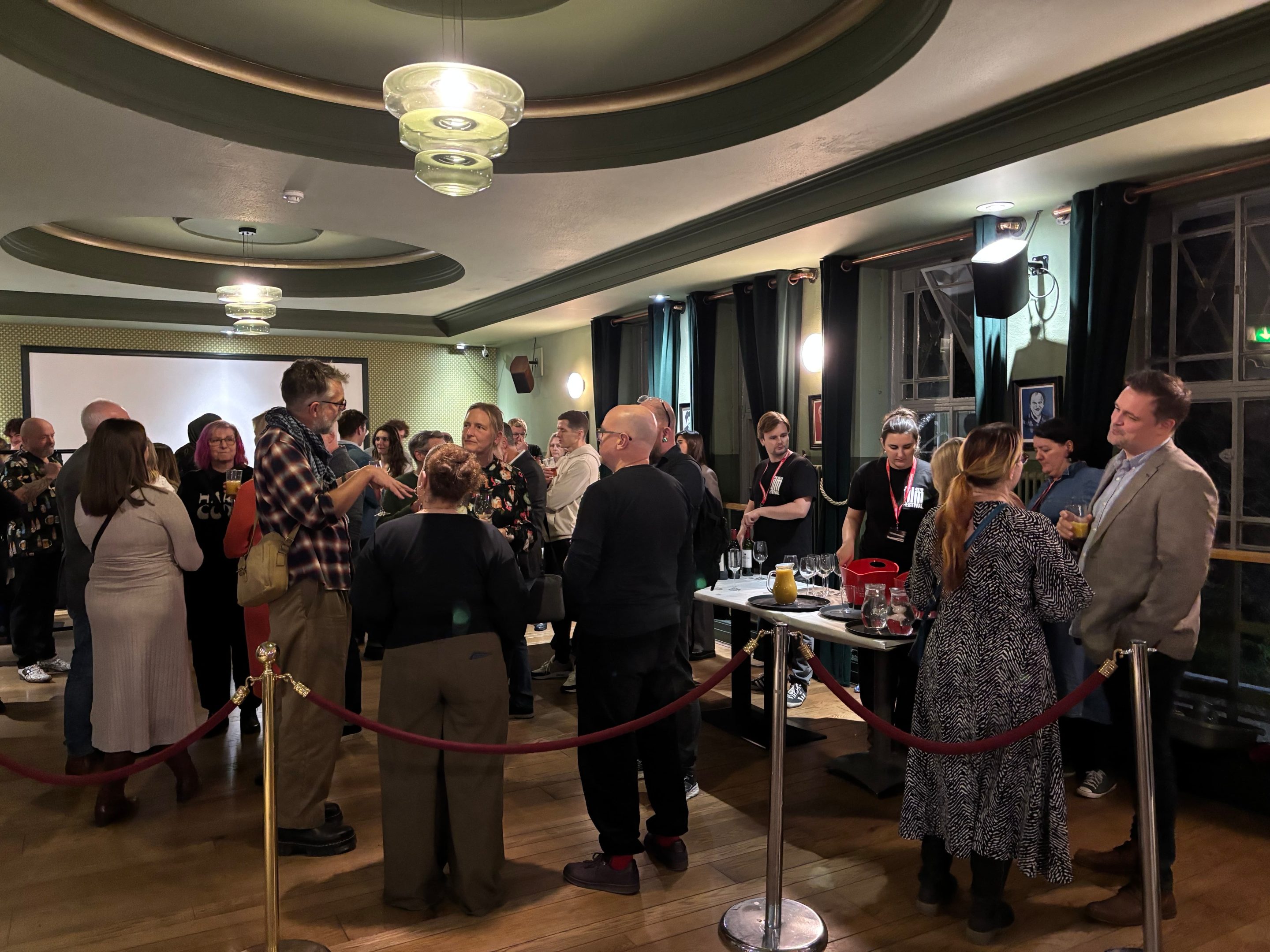
I love the Boye & Co community; it’s full of diverse people across different sectors, all working to make digital more effective. Topics such as accessibility, content management, digital sovereignty, sustainability, and, of course, AI are often discussed. We share personal experiences, learn from each other, and make connections that hopefully make all of our work better.
What users want from the Cambridge Web Platform
The day started with a talk by Barney Brown from the University of Cambridge. His team have developed the Cambridge Web Platform – a Drupal setup with designed templates – to help university departments more efficiently build websites.
With thousands of university websites, this approach is sensible. But it’s not always straightforward to get teams to use it. I was interested to hear how Barney’s team undertook user research to gather feedback on what areas in their implementation of Drupal need improvement.
A few highlights included easier ways to upload and edit images, better methods to manage SEO metadata, and more written guidance to support users.
The PHP cyber vulnerability
I talked about the PHP security vulnerability that swept through the world the week before. I gave a quick history of where the bug came from (AI-assisted research) and how the multiple leaks created chaos online and made the rollout of the security patch harder than it should have been.
I also noted the frustration with the slower release from Amazon Linux and the important work from volunteers in the PHP community to research this patch. Something that organisations who rely on PHP should consider supporting.
Behavioural science and decision making
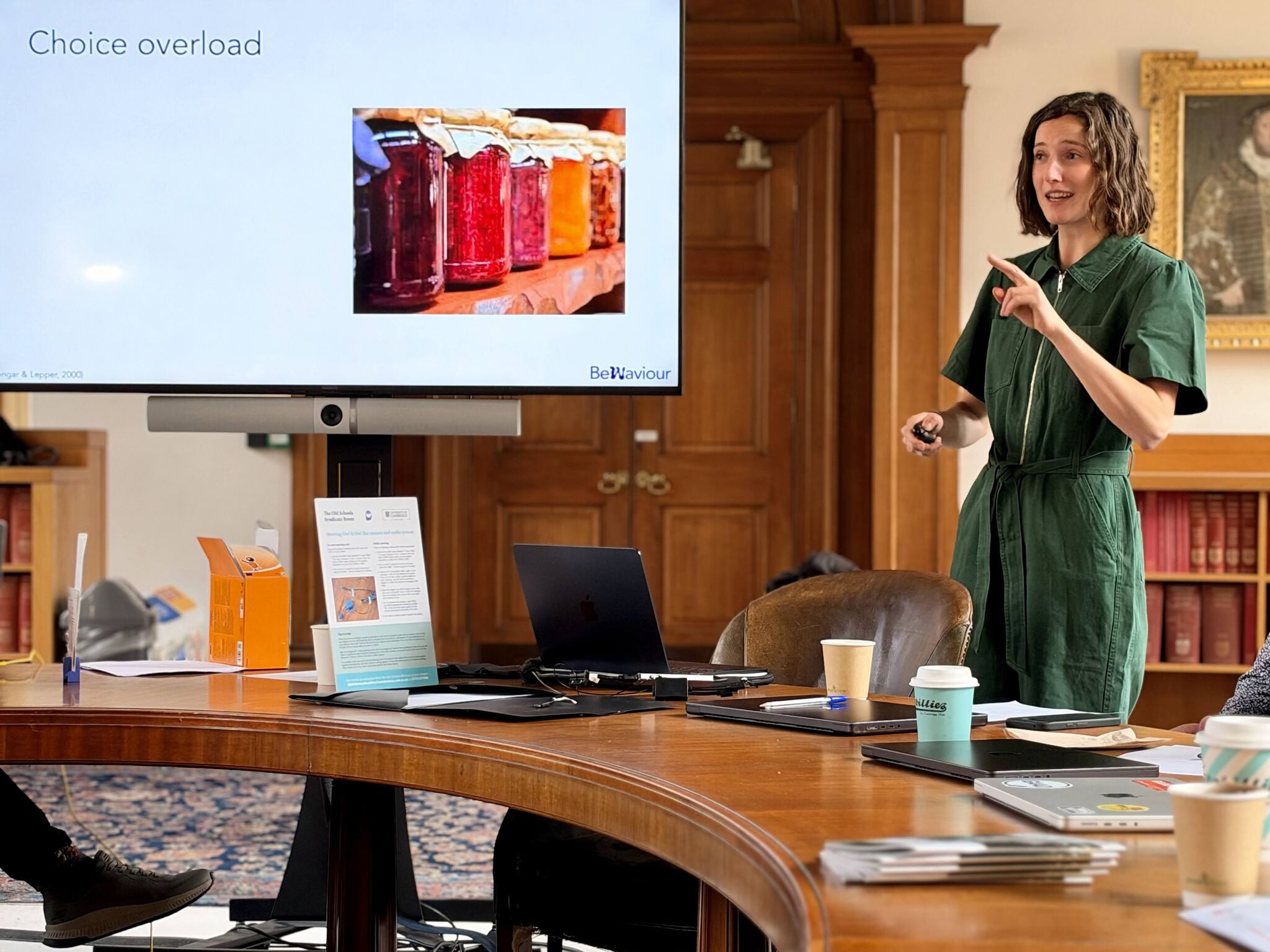
My highlight from the day was Nina Dyrberg’s (from BeWaviour) fascinating talk about how behavioural science can help leaders make better decisions.
She talked about how we think we’re using the reflective part of our brain to make decisions, but most of the time it’s instinctive. The decision traps we fall into, such as making decisions on the wrong assumptions, status quo bias, and sunk cost fallacy.
When making big decisions, think about the smallest next step you can take. I liked her framing of “what would future me do?” – imagining a future state to help navigate big decisions. Nina’s talk was engaging and interactive, and full of useful learnings.
Open health informatics in Ukraine
John Chelsom of Seven Informatics talked about how open health informatics is being used in Ukraine.
He explained how Western Governments have done a pretty bad job in digital health and how open systems offer more hope.
He briefly touched on ethical decisions and AI and when is it right to delegate to AI (when it results in better outcomes for patients).
He talked about his work in telemedicine in Ukraine and the development of open platforms to help create excellent digital health services. The aim of the projects he is involved in is to enable Ukrainians to build their own digital health systems – “Made in Ukraine” – rather than rely on bought-in systems. Open platforms support this goal.
MongoDB
Vasilis talked about his new role at MongoDB and their approach to marketing, given 75% of their customers are self-service (presumably via the open source route).
He touched on lower web traffic to their corporate website, down 60-70% due to AI search. Vasilis was the first to ask in this age of AI: will the web page disappear? Will the CMS disappear? Questions that we came back to as the day progressed.
Super Intelligent Layouts
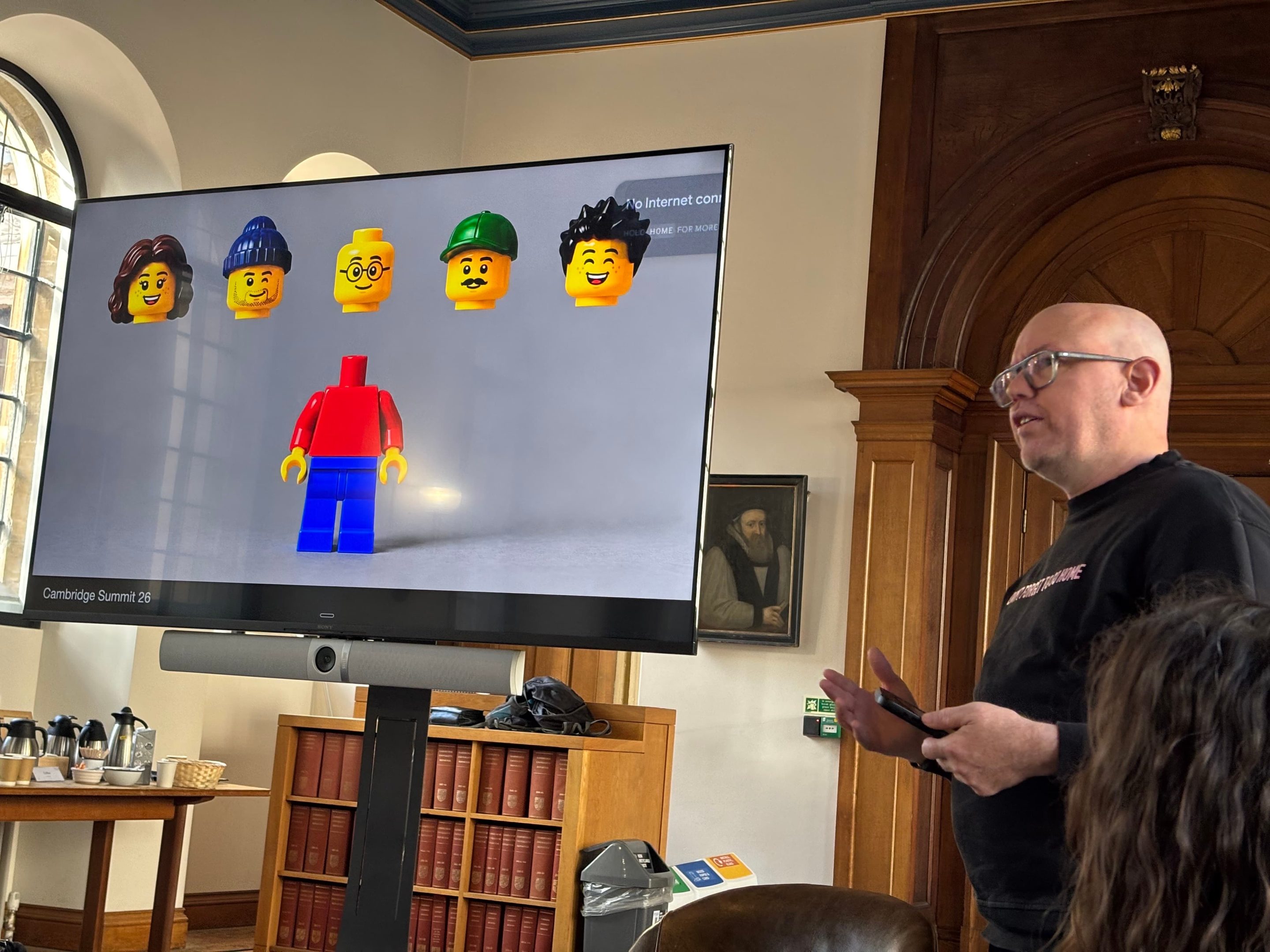
Markus Schork of Codal talked about Super Intelligent Layouts. There is a tension in CMSs between editing structured content and controlling the end-user experience. The ideal being the author manages the content and templates inform the layout. We’ve had many of these discussions at Boye & Co groups in the past.
He demoed examples of more intelligent templating systems that offered different layouts depending on the combination of content entered into a CMS. The intention is to keep CMS content highly structured and remove the need for CMS authors to manage page layout – leaving this to the front-end layer and design systems. His demo was essentially a sophisticated template system, the sort of thing possible with tools like Twig, which we use on projects.
One key learning was that this approach gives both structured content and a resilient template layer. If content is missing, then the template reformats around this and still works. Resilient templates and structured content are a really good combination for effective CMS-powered websites.
Using AI to understand our work better
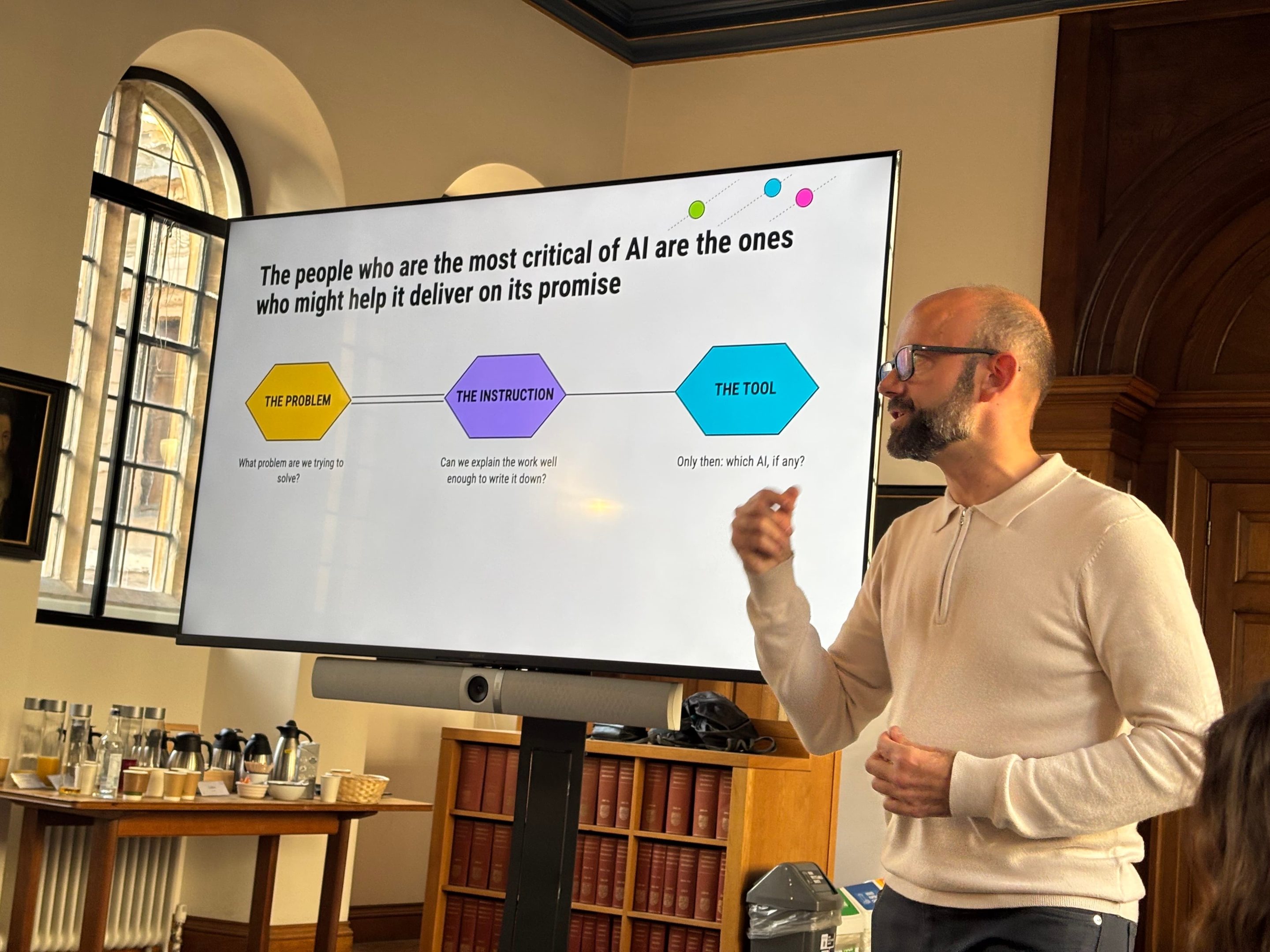
Ben Lee from Instruction talked about AI and how to use it effectively in business. He talked about critical thinking and how it’s essential that we protect our judgment while using AI. He thinks about the problem to solve, then whether we can explain the work by writing it down, and only then reviewing whether AI tools can help in any part of this process.
This process starts with an interview, just getting people to explain how they do the work, what special knowledge they have, where the friction is.
One of his slides said, “The people who are the most critical of AI are the ones who might help it deliver on its promise.” AI doesn’t understand context, so it’s up to us. He suggested keeping a failure log to record what went wrong and why. The talk almost felt like a business process talk given what it covered. Many of Ben’s tips would work well regardless of whether AI is in the mix.
Make your content easier for machines to understand
Tom Cranstoun of Tityra gave a whistle-stop tour of making content for machines to understand (he calls this MX or machine experience).
He talked about Adobe AEM and how they are making lots of money from Open Source, even though AEM has a fraction of the CMS market. He talked about the different layers that help Adobe, such as the Java Content Repository (JCR) standard to describe content and Jackalope (a PHP implementation I’ll have to look into).
Most web pages are just text which AI has to guess how to extract information from. Standards like JCR can help. He advocated for giving machines what they need to understand the page. Start with tools like LD-JSON and Dublin Core to describe your page in machine-readable ways.
I reflected that this all harkens back to the early days of the web: well-structured, semantic HTML with metadata to mark up data for machines. We used to have microformats, now we have LD-JSON schemas.
AI, the future of websites, and book reviews
The rest of the day continued with shorter perspectives and discussions from a range of people across a variety of topics. AI came up again, one agency is seeing huge bloat in RFPs where clients are using AI to generate unnecessary text. Where websites are being created with AI, atomic design systems are helping with quality (we’ve seen this with AI prototypes we’ve built). We also discussed how challenging it is to measure ROI for digital work – AI complicates this even more.
The topic of who is the website for cropped up. Near the end John suggested it’s inevitable that websites will disappear in the future, replaced with text being consumed by AI. It poses the question why would people use websites when AI is a better experience?
I’m not personally convinced that is the case, there are a lot of use cases that websites meet more effectively than AI. One of the biggest is trust and accuracy. This is before you wonder about the long-term economic stability of these AI companies and what increased AI usage is doing for climate change.
I also feel uncomfortable with the idea of our experience of the web being filtered through a small number of mega tech companies and their AI tools. That is not the open web I want to build. I believe websites are here to stay for the future. Though, as Tom says, we’ll have to optimise them for machines as much as we do for humans.
We also had a lot of book recommendations, which I’ve copied below. It’s interesting to reflect that everyone thought physical books would vanish with the advent of the internet and e-books, nothing could be further from the truth.
- Co-Intelligence: Living and Working with AI, Ethan Mollick
- The Nerd Reich: Silicon Valley Fascism and the War on Democracy, Gil Duran
- Zero Click Marketing: How to Build Brands and Earn Customers on a Traffic-Starved Web, Amanda Natividad, Rand Fishkin
- The Reverse Centaur’s Guide to Life After AI, Cory Doctorow
- Art and Fear, David Bayles, Ted Orland
- The AI Con: How to Fight Big Tech’s Hype and Create the Future We Want, Emily M. Bender, Alex Hanna
- How Buildings Learn: What Happens After They’re Built, Stewart Brand
- Designing Connected Content: Plan and Model Digital Products for Today and Tomorrow, Carrie Hane, Mike Atherton
- You’re My Favorite Client, Mike Monteiro, Austin Kleon
- End Times Fascism: And the Fight for the Living World, Naomi Klein, Astra Taylor
In all, it was a fun and interesting day with lots of engaged people who care about making digital work better. I’m looking forward to next year!
In the evening, we visited Cambridge Film Festival, where I’m a trustee, attended the Studio 24 gala, where many clients and friends attended, and watched Mouse, a charming, gentle coming-of-age film about loss, family and friendship.